7 Benefits of Pedicab Advertising That Outperform Traditional OOH
A billboard gets 2.4 seconds of attention. A pedicab ride averages 8 minutes.
That is not a typo. It is a 200x difference in dwell time — and it changes the entire equation for brands investing in out-of-home advertising.
Pedicab advertising is one of the most underutilized formats in the OOH space, yet it consistently outperforms static and digital billboards on the metrics that actually matter: engagement, recall, and cost efficiency. At VIP Outdoor Media, we have deployed branded electric pedicab fleets at conventions, festivals, and sporting events across the country — and the results speak for themselves.
Here are the seven reasons brands are shifting budget toward pedicab advertising — and why the data backs them up.
1. Unmatched Dwell Time: 8 Minutes vs. 2.4 Seconds
This is the single biggest advantage pedicab advertising has over every other OOH format — and it is not close.
According to Nielsen's Out-of-Home Advertising Study, a digital billboard captures attention for an average of 2.4 seconds. A static billboard manages just 1.6 seconds. Even a bus shelter ad, where someone is waiting for a ride, only delivers 5 to 15 minutes of potential exposure — and that assumes the viewer is actually looking at the ad instead of their phone.
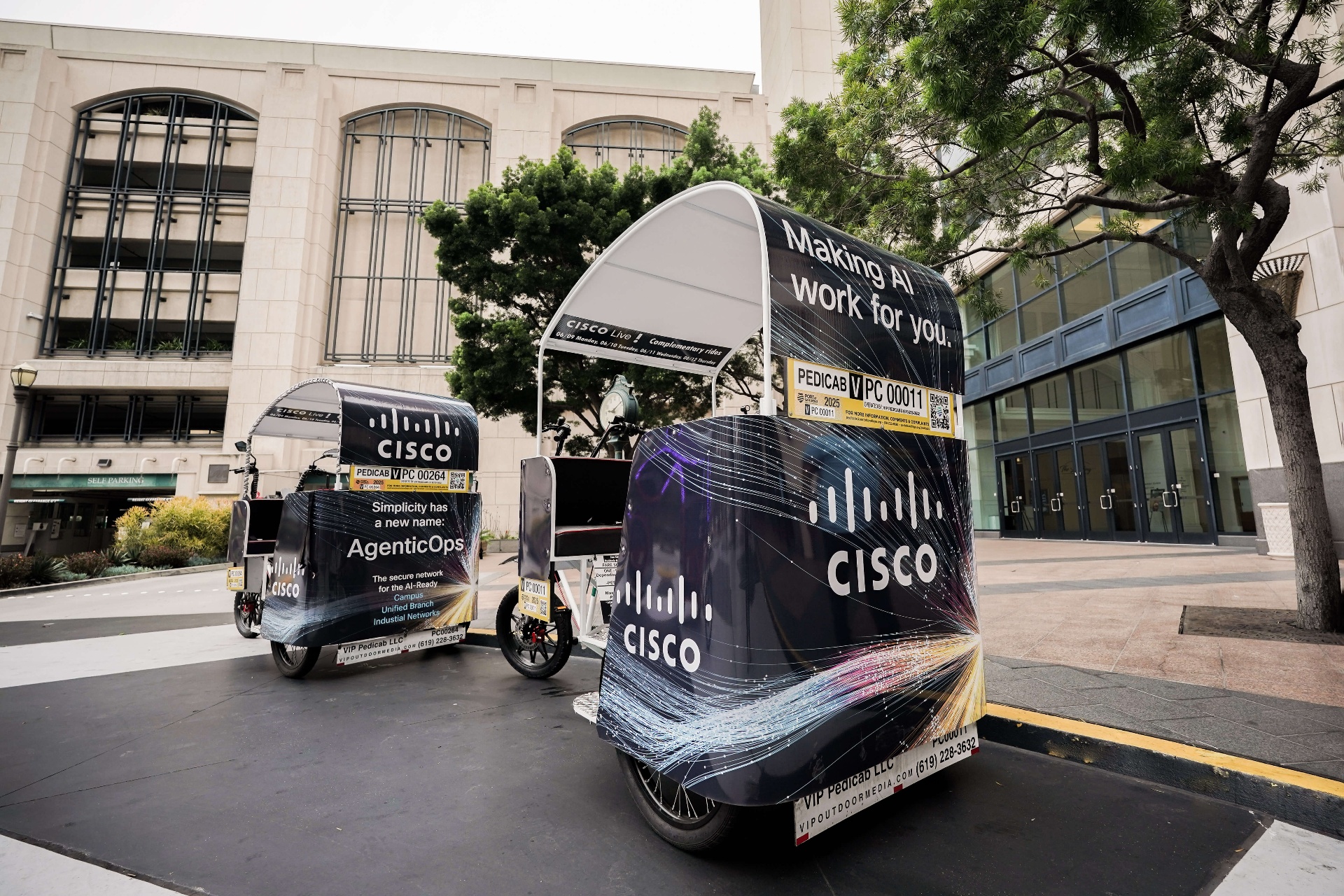
A branded pedicab ride is different. The passenger is inside the ad. They are sitting in a fully wrapped vehicle for an average of 8 minutes, seeing the branding on the canopy, the seatback, and the wrap around them. There is no scrolling past it, no driving by at 45 mph. It is one-to-one brand immersion for the entire ride.
To put this in perspective:
| OOH Format | Average Dwell Time |
|---|---|
| Static Billboard | 1.6 seconds |
| Digital Billboard | 2.4 seconds |
| Bus Shelter Ad | 5–15 minutes (passive) |
| Mobile Billboard Truck | 3–5 seconds |
| Pedicab Ride (Branded) | 8 minutes (immersive) |
2. Hyper-Local Targeting Where It Actually Matters
A billboard is fixed. A digital screen rotates between advertisers. A pedicab goes exactly where your audience is — and stays there.
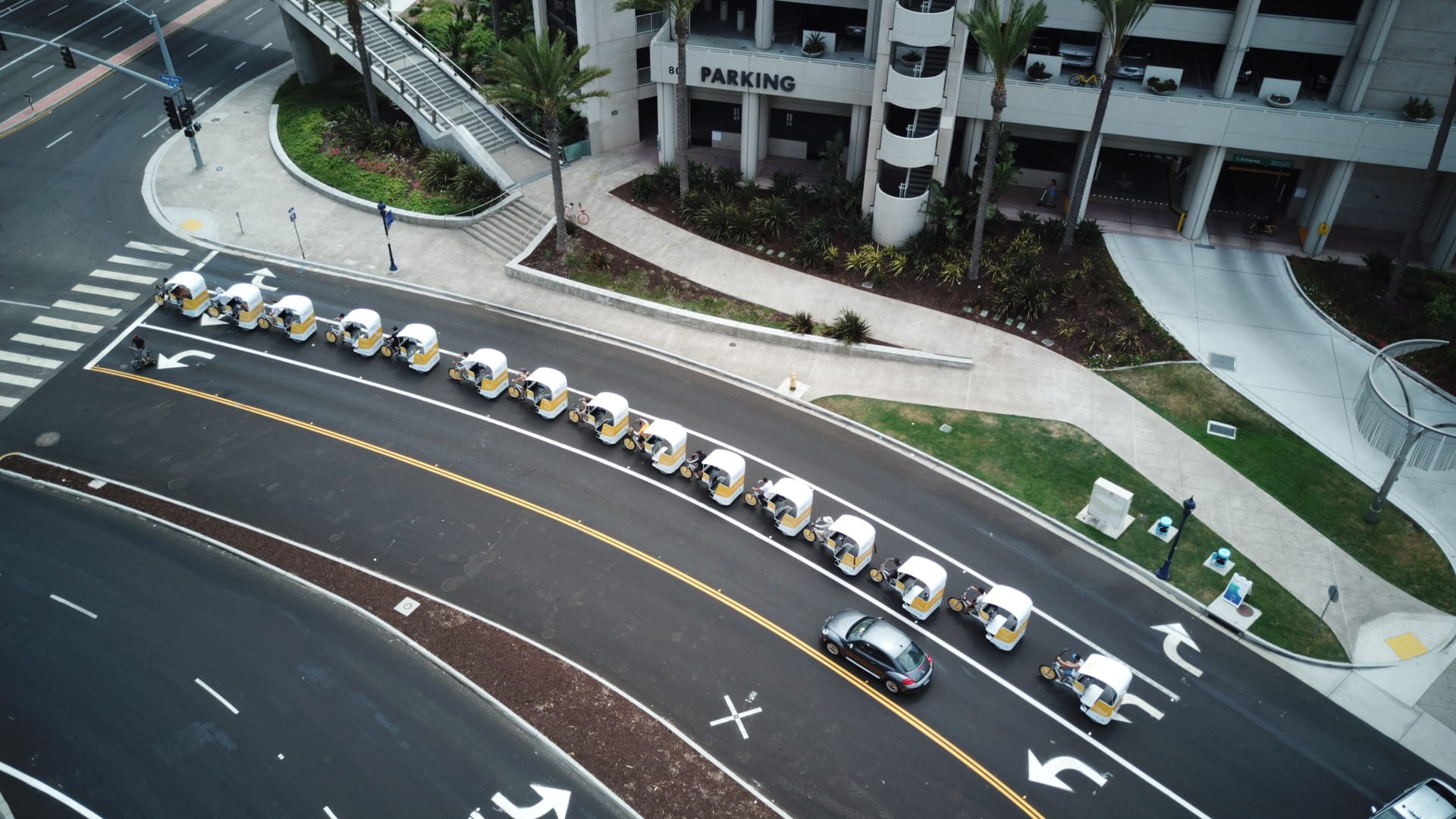
This is the operational advantage that most advertisers do not fully grasp until they see it in action. Pedicab fleets can be geo-deployed to specific corridors, venues, hotel zones, and high-foot-traffic streets in real time. If the crowd shifts from the convention center to the Gaslamp Quarter at 6 PM, the fleet shifts with it.
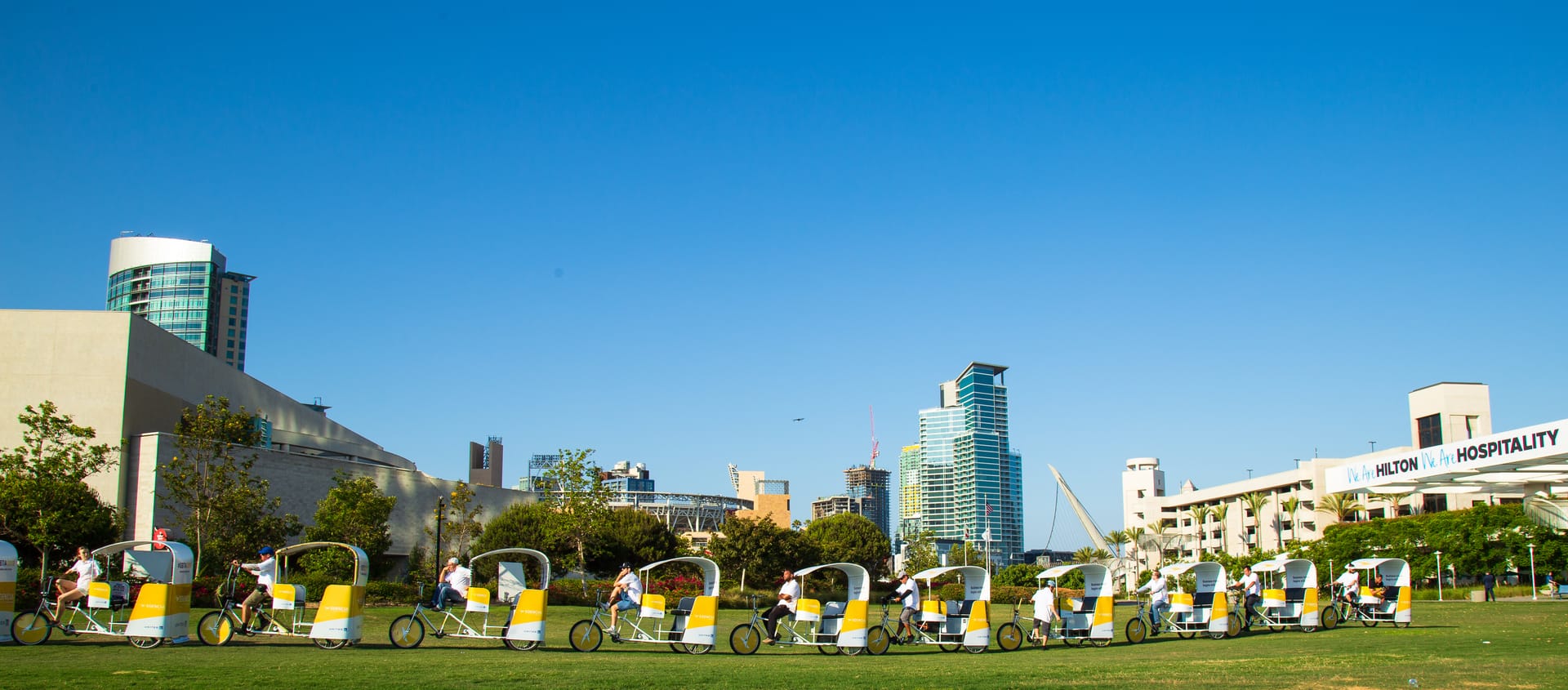
During Cisco Live 2025, we deployed 89 branded electric pedicabs across three specific zones in downtown San Diego: the Gaslamp Quarter, the Marina District, and the Convention Center corridor. GPS tracking on every vehicle gave us route-level data on exactly where impressions were being generated, and we could adjust fleet positioning in real time based on attendee movement patterns.
No static OOH format can do this. You are not buying a placement and hoping the right people walk by. You are deploying mobile media directly into the flow of your target audience.
3. The Ad Is the Experience
This is the fundamental shift that separates pedicab advertising from every other OOH format: the advertisement is not something people see. It is something they ride.
Research from Freeman shows that over 77% of consumers report more positive feelings toward a brand after interacting at a live event. Experiential marketers report a 56% increase in leads and a 70% increase in click-through rates compared to traditional advertising channels. The reason is simple — participation creates memory. Passive exposure does not.
A branded pedicab ride is experiential marketing that does not require a booth, a venue rental, or a production team. The vehicle is the activation. Every ride is a branded experience that the passenger chose to take, which means the brand association starts positive and stays positive.
At Cisco Live, attendees were not just seeing the Cisco brand on a pedicab — they were being transported by it. The brand was providing a genuine service: a free, comfortable, zero-emission ride between their hotel, the convention center, and dinner. That kind of utility-driven branding creates goodwill that no billboard can match.
4. Organic Social Amplification (Free Earned Media)
People photograph pedicabs. They post them on Instagram, LinkedIn, and TikTok. They tag the brand. This happens organically, without prompting, because a branded electric pedicab is inherently more shareable than a billboard.
During a 4-day activation, a fleet of 89 pedicabs delivering 9,000+ rides creates thousands of organic social touchpoints. Every passenger who pulls out their phone to snap a photo or record a story is generating user-generated content that extends the campaign's reach far beyond the physical footprint of the event.
Research published in the Journal of Interactive Marketing shows that user-generated content outperforms brand-produced content on engagement because it feels authentic — it is not perceived as an ad, but as someone's genuine experience. This is earned media at scale, and it costs zero additional dollars.
5. CPM That Beats Traditional OOH by 40% or More
Cost efficiency matters, especially when marketing budgets are under constant scrutiny. Pedicab advertising delivers a CPM that consistently outperforms static outdoor formats.
At Cisco Live 2025, our 89-pedicab fleet generated over 520,000 mobile impressions across 4 days at a CPM of approximately $18 — outperforming comparable static outdoor placements by roughly 40%. And those impressions are not passive glances from moving vehicles. They are high-dwell, high-engagement impressions from people who are physically interacting with the brand.
When you factor in the organic social amplification, the earned media, and the experiential value of each ride, the effective CPM drops even further. The OOH industry generated $6.98 billion in revenue through the first three quarters of 2025, with transit formats growing 11.4% year-over-year — the highest growth rate among all OOH categories, according to the Out of Home Advertising Association of America (OAAA). Brands are clearly recognizing that mobile, transit-adjacent formats deliver more per dollar.
6. Sustainability That Is Real, Not Performative
Every pedicab in our fleet is fully electric. Zero tailpipe emissions. Zero noise pollution. During the Cisco Live activation alone, the fleet eliminated approximately 3.2 tons of CO₂ compared to equivalent vehicle-based transportation.
This is not greenwashing. This is a measurable, verifiable reduction in carbon output that brands can report in their ESG disclosures and sustainability communications. When a brand wraps a fleet of electric pedicabs, they are not just advertising — they are replacing gas-powered rideshares and taxis with zero-emission transportation. The sustainability message is baked into the medium itself.
For brands with public sustainability commitments — and in 2026, that includes most Fortune 500 companies — pedicab advertising aligns their media spend with their stated values. That alignment matters to consumers, to investors, and to the press.
7. GPS-Tracked, Data-Rich Reporting
One of the historic criticisms of OOH advertising is that measurement is fuzzy. Impressions are modeled, not counted. Attribution is difficult.
Pedicab advertising with GPS-tracked fleets changes that. Every ride is logged. Every route is mapped. We can report on:
- Total rides delivered
- Miles traveled per vehicle and per fleet
- Impression density by zone and time of day
- Route heat maps showing exactly where brand exposure occurred
- Rider counts with timestamps
Case Study: Cisco Live 2025, San Diego
| Detail | Value |
|---|---|
| Client | Cisco |
| Event | Cisco Live 2025 |
| Location | San Diego — Gaslamp Quarter, Marina District, Convention Center |
| Duration | 4 days |
| Fleet Size | 89 fully electric branded pedicabs |
| Rides Delivered | 9,000+ |
| Miles Traveled | 12,460 |
| Mobile Impressions | 520,000 |
| CPM | ~$18 (40% below comparable static OOH) |
| Environmental Impact | ~3.2 tons CO₂ avoided, zero emissions |
The Bottom Line
The OOH industry is growing — $6.98 billion in revenue through Q3 2025, with 18 consecutive quarters of growth. But not all OOH formats are created equal. The formats winning the most budget are the ones that deliver real engagement, real data, and real brand experiences — not just impressions.
Pedicab advertising sits at the intersection of experiential marketing, sustainable transportation, and out-of-home media. It delivers dwell times that are orders of magnitude higher than billboards, CPMs that outperform static formats, organic social amplification that extends reach for free, and GPS-tracked data that agencies and brands can actually use.
If your brand is activating at conventions, festivals, sporting events, or in any high-foot-traffic urban environment, pedicab advertising is not a novelty. It is the most efficient way to put your brand directly in the hands of your audience.
---
VIP Outdoor Media operates the largest electric pedicab advertising fleet in the United States. To learn how a branded pedicab activation can work for your next event or campaign, visit vipoutdoormedia.com or reach out to our team directly.
---
Sources
- Nielsen Out-of-Home Advertising Study — billboard dwell time benchmarks
- OneScreen.ai — dwell time in OOH formats
- OAAA — OOH revenue hits all-time Q3 high ($6.98B YTD, transit +11.4%)
- Freeman — 77% of consumers report positive feelings after live brand interaction
- Journal of Interactive Marketing — UGC engagement and authenticity
- Innovate.rocks — experiential marketing ROI (56% lead increase, 70% CTR increase)
- Transport Advertising Council — 97% recall rate for mobile billboards
- VIP Outdoor Media — Cisco Live 2025 case study data