Pedicab Advertising vs. Traditional Billboards: Which Delivers Better ROI?
Marketing managers evaluating out-of-home (OOH) advertising face a critical choice: should you invest in traditional static billboards or mobile pedicab advertising? Both deliver brand visibility, but the similarities end there.
Using real campaign data from brands like Cisco, HBO, Stryker, and UnitedHealthcare, this comparison reveals why pedicab advertising consistently outperforms traditional billboards on the metrics that matter most — engagement time, brand recall, social sharing, and cost-per-meaningful-impression.
The Numbers: Pedicab Ads vs. Static Billboards
| Metric | Pedicab Advertising | Static Billboards | Digital Billboards |
|---|---|---|---|
| CPM | ~$18 | $5–$8 | $10–$20 |
| Average exposure time | 8+ minutes | 6 seconds | 6–8 seconds |
| Two-way interaction | Yes (driver + rider conversation) | No | No |
| Geographic flexibility | Real-time route adjustment | Fixed location | Fixed location |
| Social media generation | Very High | Very Low | Low |
| Brand recall rate | 85%+ (estimated) | 25–35% | 30–40% |
| Carbon footprint | Zero (electric fleet) | Medium | Medium |
| Measurability | GPS tracking, ride counts, engagement data | Estimated traffic counts | Estimated views |
Why Engagement Time Changes Everything
The single biggest advantage of pedicab advertising over billboards is dwell time. Here's what 8+ minutes of brand exposure actually means:
Inside the Pedicab
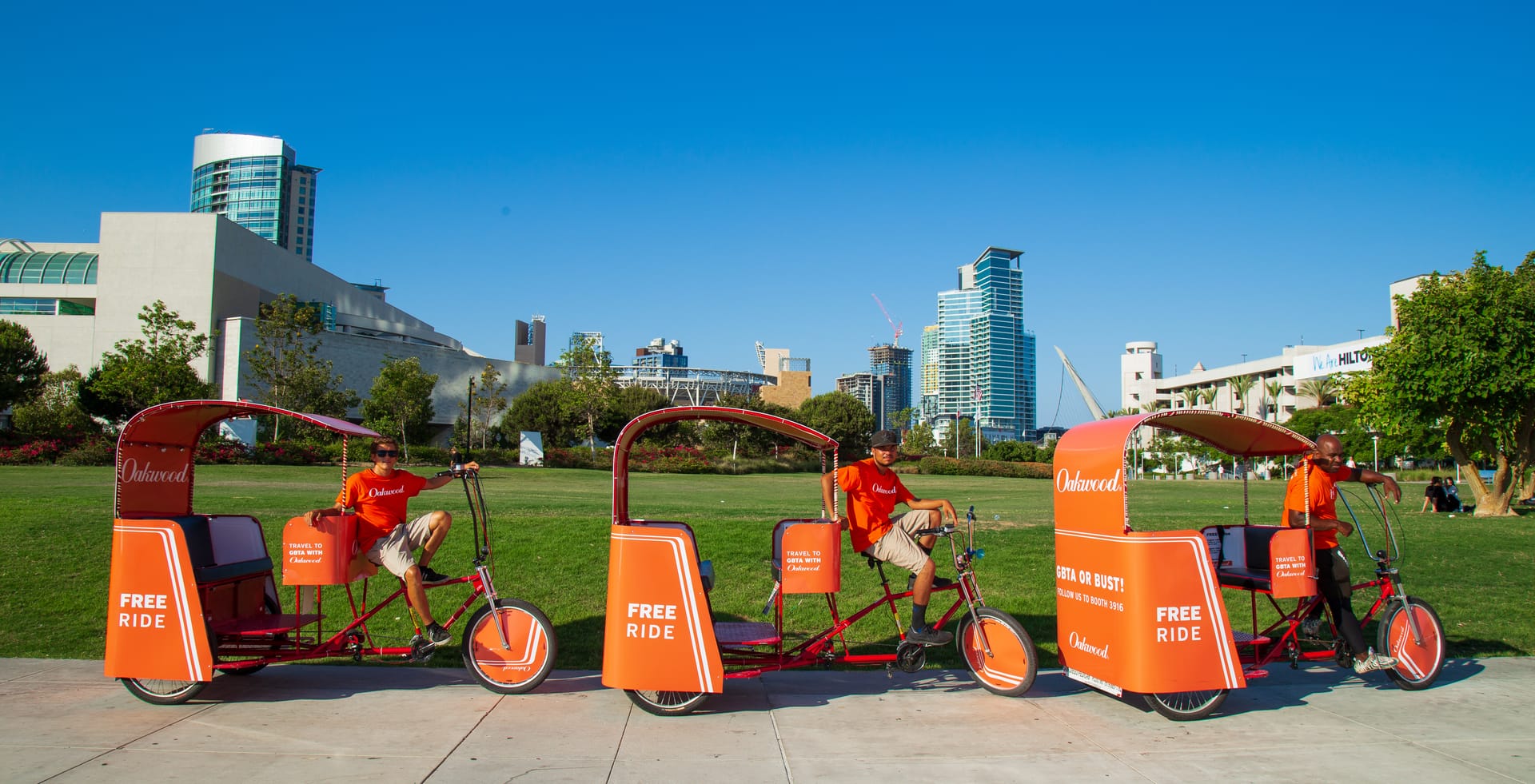
- Riders sit surrounded by your brand on all sides — canopy, interior panels, seat wraps
- The driver acts as a live brand ambassador, answering questions and sharing key messages
- Riders take photos, post to social media, and share with friends — generating earned media that billboards simply cannot produce
- Samples, brochures, and promotional items can be distributed directly
Outside the Pedicab
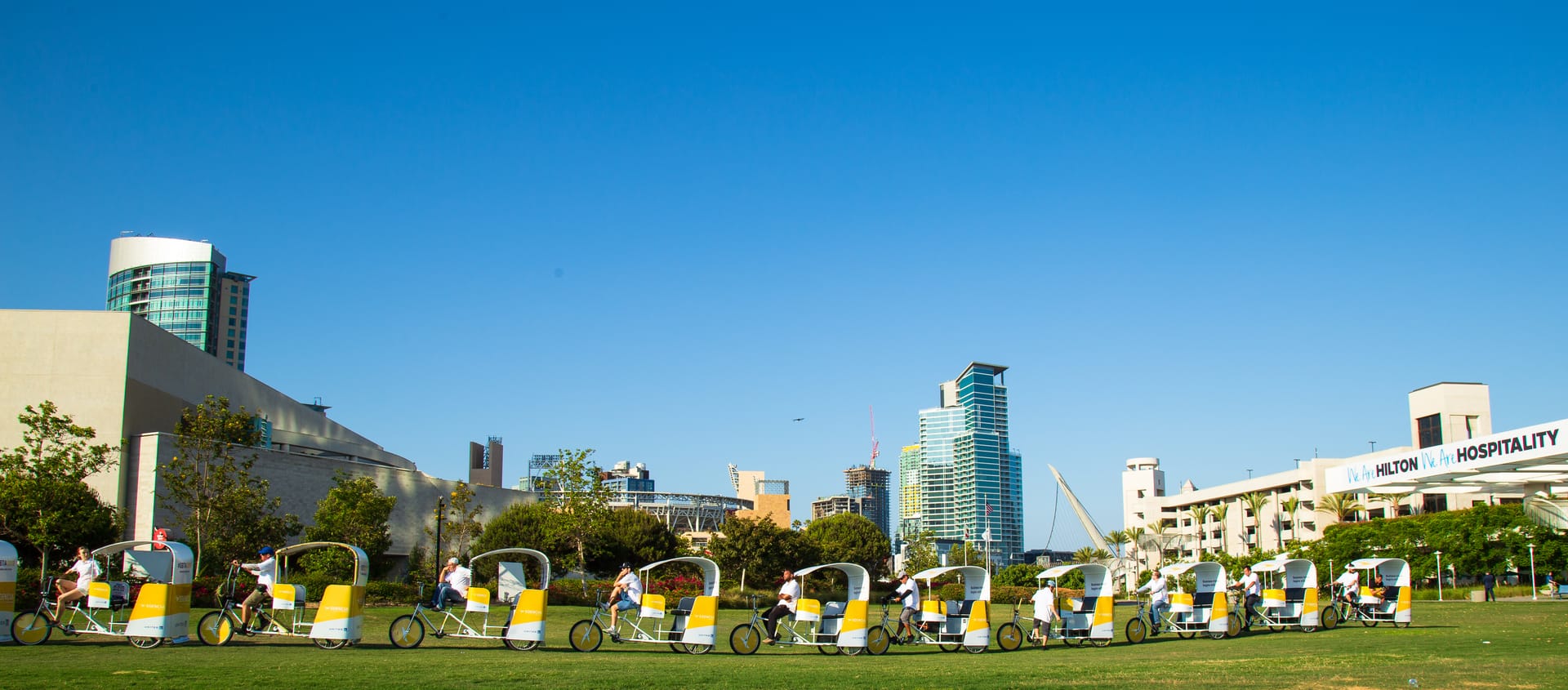
- Pedestrians, drivers, and other riders see your full-wrap mobile billboard cruising through high-traffic areas
- LED-enhanced wraps extend visibility into evening and nighttime hours
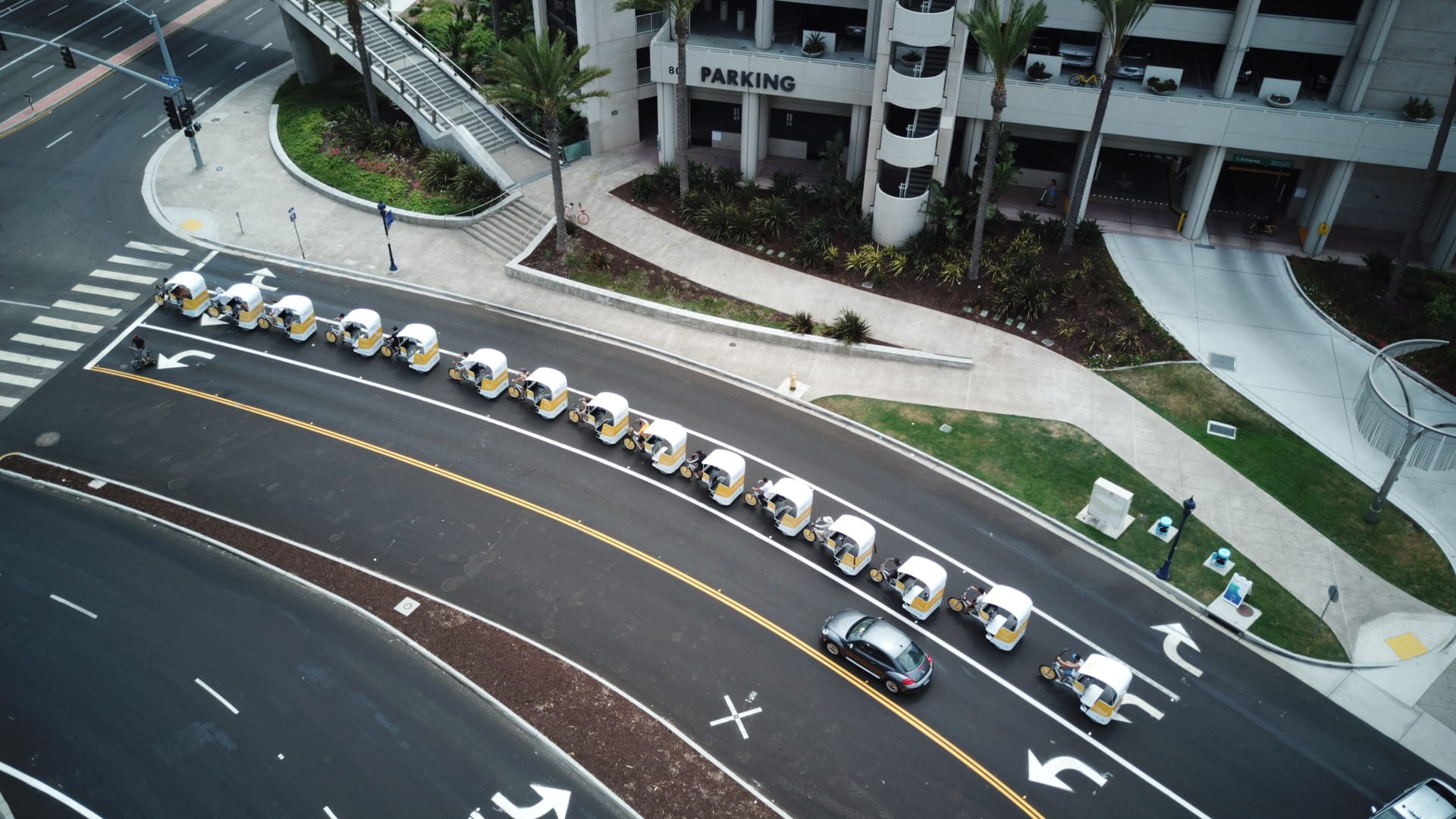
- A fleet of 50+ branded pedicabs creates a visual domination effect that no single billboard can match
Real Campaign Comparison: Cisco Live 2025
Let's compare what Cisco achieved with pedicab advertising vs. what a comparable billboard campaign would have delivered:
Cisco Live Pedicab Campaign (VIP Outdoor Media)
- 89 branded pedicabs deployed across San Diego
- 9,000+ rides over the convention period
- 12,460 miles covered across downtown, Gaslamp Quarter, and Convention Center corridor
- 520,000+ impressions with 8+ minutes average engagement per ride
- CPM: ~$18
- ~3.2 tons CO₂ saved vs. vehicle transport
- Organic social media: Thousands of photos shared by riders and pedestrians
Equivalent Billboard Campaign (Hypothetical)
- 10 static billboards along San Diego freeways
- ~500,000 impressions over the same period (estimated from traffic counts)
- 6 seconds average exposure per impression
- Zero interaction — no conversations, no samples, no social sharing
- No geographic flexibility — billboards stay in place regardless of where attendees actually are
- No measurability beyond estimated traffic flow
When Billboards Still Make Sense
To be fair, traditional billboards have legitimate use cases:
- Long-term brand awareness campaigns (months-long placements)
- Highway-adjacent businesses targeting drivers (restaurants, gas stations, hotels)
- Mass-market consumer products where frequency matters more than engagement
- Markets without pedicab infrastructure
The Social Media Multiplier
One advantage that's hard to quantify but impossible to ignore: pedicab advertising generates organic social media content at scale.
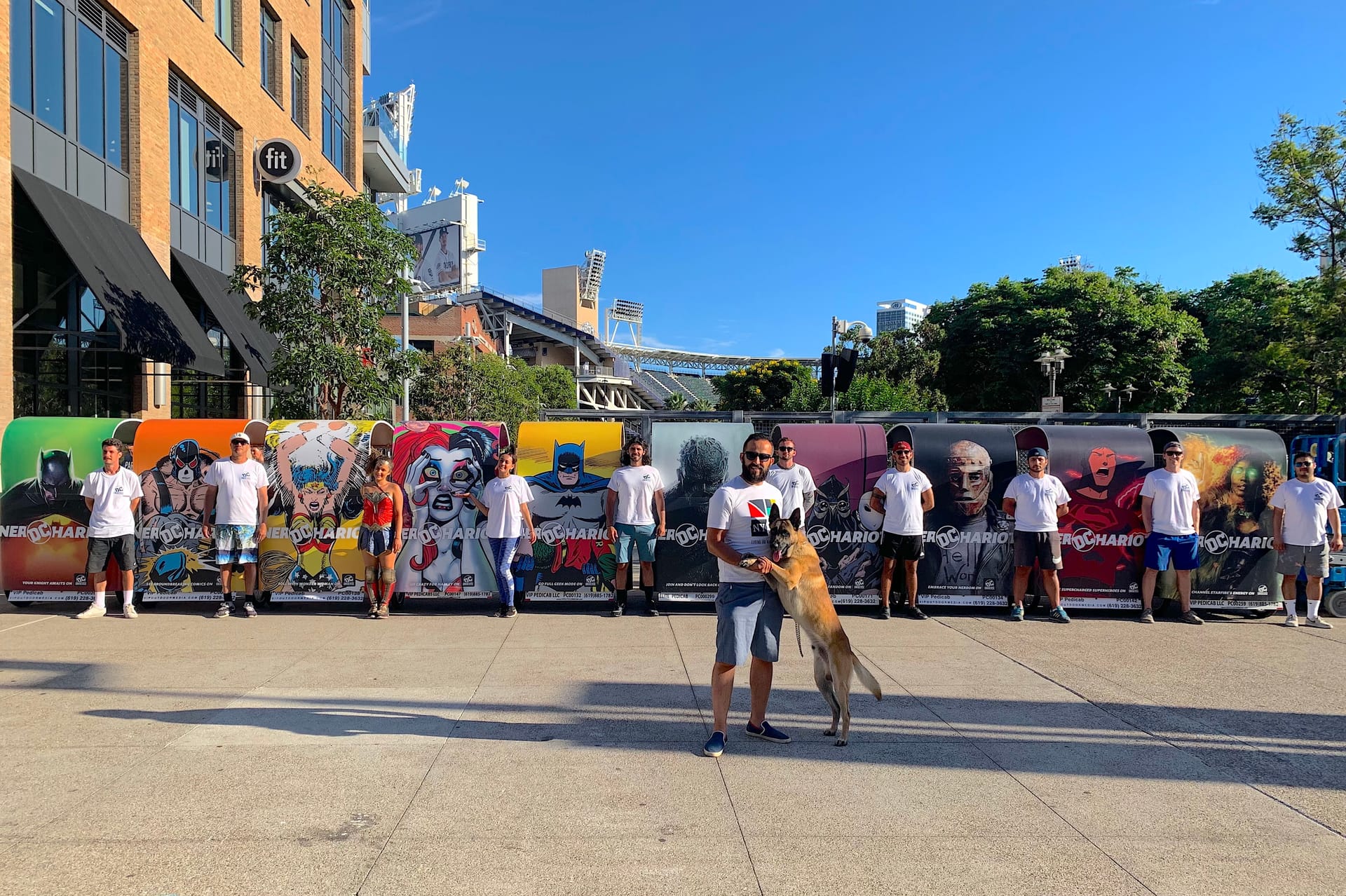
When HBO wrapped pedicabs as Iron Thrones for Game of Thrones at Comic-Con, thousands of riders and pedestrians photographed and shared them across Instagram, Twitter, and TikTok. That earned media — which cost HBO nothing beyond the campaign itself — amplified the brand message to millions of additional viewers.
Static billboards generate essentially zero social media engagement. When was the last time someone photographed a freeway billboard and posted it to Instagram?
Key Takeaways
- Pedicab advertising delivers 8+ minutes of engagement vs. 6 seconds for billboards — a 80x advantage
- The CPM of ~$18 is higher than basic billboards but represents dramatically higher-quality impressions
- Brand recall, social sharing, and two-way interaction make pedicab ads the superior choice for events and conventions
- GPS tracking and ride counts provide measurable ROI that billboard estimates cannot match
- For convention marketing and experiential campaigns, pedicab advertising outperforms billboards on every meaningful metric
- Billboards still work for long-term highway awareness — but that's a different marketing objective
Choose the Right Medium for Your Campaign
If your goal is reaching convention attendees, trade show visitors, or event audiences with memorable brand experiences, pedicab advertising delivers results that billboards simply cannot match.
VIP Outdoor Media operates 1,000+ electric pedicabs across 35+ US cities. Get a free campaign proposal at vipoutdoormedia.net/contact or call (619) 228-3632.